

It was this article published on a blog by the newspaper Le Monde that caught my attention, regarding the ecological and human impact of gold mining on the world. Obviously, as an online jeweller, I asked myself the question of the impact of silver mining, so I did a bit of digging on the web and here are the elements I managed to gather, don’t hesitate to send me your comments.
The wild gold
I won’t go into detail about the elements of the cited article, so I recommend you read it. Uncontrolled gold mining is widespread in Africa and Latin America. It devastates waterways and forests. It is the result of the exploitation of alluvial gold, present in waterways, which requires the felling of trees, the creation of water basins and the pollution of the same through the use of mercury used to amalgamate the gold flakes. Mixing sludge with water also significantly reduces the amount of dissolved oxygen and leads to the death of aquatic fauna.
How is this possible?
The price of one ounce (28.35 g) of gold is approximately $1,400 for the month of June 2013; you can check the evolution of prices on this site. This is a huge price, which exploded after the crisis that began in 2008, when an ounce of gold was worth only $800. Obviously, the explosion in the price of gold has led to a sharp increase in uncontrolled gold mining. Since the means necessary for illegal gold miners to extract gold are weak: chainsaws, water pumps and mercury constitute the bare necessities, essential, but sufficient to recover gold from a stream.
Obviously, the higher the price of gold, the more profitable gold panning becomes.
Another contributing factor is the lack of traceability: mined dirty gold, once melted, is in no way different from gold mined legally with state controls. It is estimated that 5 tonnes of illegal gold are exported to French Guiana, the equivalent of the legal amount. 50% of Guyana’s production is illegal.
You can learn more by reading this report on gold panning in French Guiana.
Due to its extremely high value and low cost of extraction, wild gold has flooded the markets.
What about silver mining?
The case of silver is very different, mainly due to its price, an ounce of silver is worth only $22.50, which is 70 times less than gold. Consequently, the artisanal or wild exploitation of this metal can only be profitable with particularly rich deposits of silver, which have all been exploited.
Consider the case of a mine about to be exploited in Mexico. The exploitation of the new Pitarilla silver mine should begin in 2014, the quantity of exploitable silver is estimated at 333 million ounces for an investment, also estimated, of 741 million dollars. It will be one of Mexico’s major mines, as Mexico is already the largest silver producer in the world. As we can see, the investment is much heavier and only large companies can undertake such large projects, obviously controlled by the States (who receive their share).
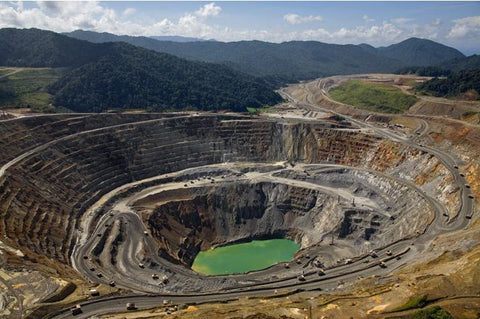
At the current price, Silver Standard, which operates this project, could generate revenues of $7,500 million (not including other metals mined in parallel) during the mine’s 32 years of operation.
The silver thus extracted must then be separated from the other metals with which it can be alloyed, gold, zinc and lead, which requires chemical treatments, which can only be achieved by large industrial plants. Subsequently, the refining process begins which also uses acids, which are normally treated by the manufacturer so as not to be released into nature.
As we can see, it is the low value of silver (compared to gold) and its low content in mines that prevents the illegal extraction of this precious metal. Large companies, for their part, must comply with local regulations.
It should be noted that just like gold, silver is also untraceable, can be remelted and is therefore almost impossible to determine its origin from the mine. On the other hand, when it comes to Mexican silver, it is the state that is responsible for placing ounces of pure silver on the market to supply the local jewelry market.

latest posts published

Moonstone in jewelry

Engraving of men’s signet rings
Diamond clarity: inventory of natural inclusions

Creation of a Chrisme Medal in 18K Gold

18k gold men’s necklace (handcrafted)
Recycle 800 silver into pure silver

Large 18k solid gold bracelet

18k gold chain pendant

the history and symbols behind the Mo signet ring
