
THE moonstone is a precious stone highly sought after in both lithotherapy and jewelry
You should know that «moonstone» is a familiar trade name designating a feldspar characterized by a silvery to bluish shimmering reflection which appears to float on the surface of the stone (source).
Jewelers also use it to mount it on rings or pendants given its particular colors and light reflections which make it a stone that is both unusual and relatively economical compared to precious stones.
Pear-shaped cabochon moonstone characterized by the optical effect of adularescence
INDEX
- What is moonstone?
- Origins of moonstone
- The colors of the moonstone
- What is the price of moonstone
- Recognizing the real moonstone
 |
 |
Examples of moonstone jewelry, with a moonstone pendant on the left and a gold moonstone ring on the right
1. What is moonstone?
Moonstone is a feldspar with the chemical formula KAlSi3OR8which is the most abundant mineral group on Earth.
Nothing a priori of value or special!
Although only a small percentage of these minerals have gem quality optical phenomenon of adularescence giving to the stone silvery or bluish reflections that recall moonlight, hence the name of this stone.
Moonstone is composed of two species of fledspar which are responsible for the diffraction and refraction of light passing through the stone and responsible for the optical effect of adularescence.
The photo of this rough moonstone demonstrates what this reflection of adularescence is.
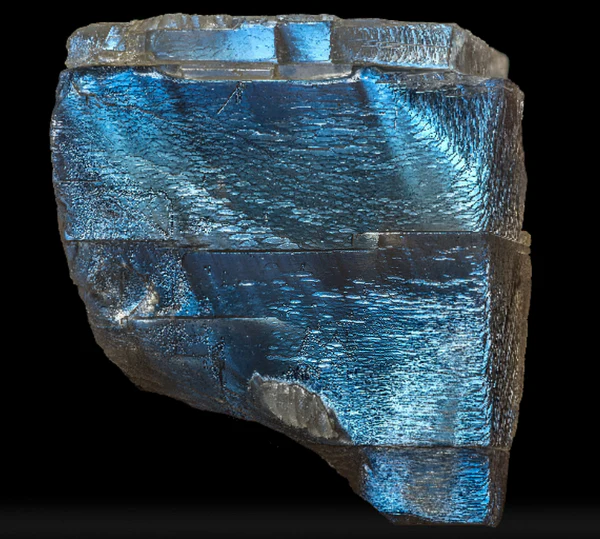
Raw moonstone from Mexico
We would like to point out that to deserve the term moonstone, the stone in question must necessarily present this optical effect (source). Moonstone is not a precious stone, but a fine stone.
2. Origins of moonstone?
Moonstone is mined from numerous mines around the world, the main producing countries of which are shown in this map:

Map showing major moonstone producers
You can find the full list of these repositories via this link or click on the image below to view the full list.

To learn more about moonstone mining, I highly recommend watching this video showing gemologist Patrick Voillot exploring the moonstone mines of Sri Lanka.
3. The colors of moonstone
Moonstone can take on many colors listed below:
- white
- blue
- cream
- yellow
- orange
- brown
- grey/black
- rose

Image showing the wide range of colors moonstone can take on
4. The price of moonstone
The price of a moonstone varies greatly depending on its qualityboth translucent and slightly opaque with a more or less accentuated adularescence effect.
Quality criteria
To evaluate the quality of a moonstone, the easiest way is to use the description provided by this gemology site:
| 1/3 | cabochon, from opaque to translucent, cleavages and fractures, surface defects, opaque or dark color, absent or very weak optical effect | Award |
| 2/3 | Well-polished cabochon or faceted cut, transparent to translucent, light color, visible optical effect of flattering, chattering, asterism, opalescence and/or adventurousness | 15€/ct |
| 3/3 | Well polished cabochon or quality faceted cut, transparent with no inclusions visible to the naked eye, colorless to slightly opalescent, superb optical effect of blue adularescence | 50€/ct |
Depending on the very variable quality of the stone, its price can vary from a few euros per carat up to more than 150 euros per carat.

Where to buy moonstone
If you would like a moonstone made into jewelry, the easiest way is to contact your jeweler directly to get a one-time quote including:
- The supply of stone
- jewelry design
- stone mounting
As we do through our jewelery creation service.
Otherwise, on the web, you can contact these stone suppliers:
5. Recognize the real moonstone
There are moonstone imitations that can easily confuse the buyer.
Not being a gemologist myself, the simplest thing is certainly to share with you the non-exhaustive list of common moonstone imitations established by the Gemmo.eu website:
| – Jadeite almost colorless, very translucent, cabochon cut and mounted like a jewel on a highly polished metal base to reinforce the internal luminescence which can be compared to adularescence (McClure, 2006) – Quartz triplet/thin colored layer/quartz whose thin layer inserted in colorless Quartz gives a visual effect similar to that of Moonstone (McClure, 2006) – Glass/labradorite doublet with cabochon dome in colorless artificial glass which occupies +90% of the volume and acts as a magnifying glass on a flat base in Labradorite beautiful bluish iridescence (Hainschwang, 2006) – Synthetic spinel colorless heated to cause an opalescence which may be confused with the flatterescence of Moonstone (O’Donoghue, 2006) – Synthetic spinel colorless covered with a thin bluish layer, probably titanium-based, recognizable by the submetallic shine and the too uniform distribution of the pseudo-optical effect (author TP, 2008); also with 4 or 8 branched asterisms visible under strong directional light (Renfro, 2011) – Sillimanite when it presents slightly bluish reflections similar but not identical to those caused by the adularescence of Moonstone (Quinn, 2006) |
In fact, there are many sites on the web that sell so-called moonstones. The best thing is certainly to contact gemologists or refined stone cutters to supply you with moonstones.
To go further:
latest posts published

Moonstone in jewelry

Engraving of men’s signet rings
Diamond clarity: inventory of natural inclusions

Creation of a Chrisme Medal in 18K Gold

18k gold men’s necklace (handcrafted)
Recycle 800 silver into pure silver

Large 18k solid gold bracelet

18k gold chain pendant

the history and symbols behind the Mo signet ring
