

The blue diamond may be a diamond, but the rarity of its color in nature makes it a much more expensive gemstone than classic white diamonds. This explains why blue diamonds regularly make headlines, breaking price records at auctions every time.
It owes its color to the presence of Boron at the center of its structure, therefore requiring particular geophysical conditions that allow its formation. This explains why only three mines in the world produce the majority of natural blue diamond production:
- Argyle Mine in Australia
- Culligan mine in South Africa
- Golonconda Mina in Interno
Photo with a 29.6-carat rough blue diamond from the Culligan mine, owned by Petra Diamonds:
If you’re wondering what blue diamond jewelry might look like, here’s an example of a blue diamond ring:
 |
 |
INDEX
- The different shades of the blue diamond
- What is the price of blue diamond
- Treated blue diamonds
- Blue diamonds celebrate
The color shades of the blue diamond
Blue diamonds can take on more or less accentuated shades as shown in this color scale:

When talking about blue diamonds it is difficult to be precise as the range of colors these stones can take on is so wide. Here is a summary table of the most common shades of blue:

Blue diamonds take on shades that vary from blue-gray to blue-green. Of course, it is the most pronounced blue diamonds that are the most expensive (image source) because they are the most fashionable and most coveted.
Difference from a sapphire
Consulting the previous table we clearly see that the blue diamond is easily distinguished from the color of the blue sapphires which are the only blue gemstones next to the blue diamonds. Additionally, because sapphires have a different chemical and physical composition than diamonds, it is easy to differentiate them from diamonds.
The price of blue diamonds breaks all records
Exceptional blue diamonds, both for their size and their clarity (IF or FL), are traded for increasingly crazy sums at auctions:
- In 2009 the 7-carat Star of Josephine and Flawless diamond sold at auction for $9.49 million, or nearly $1.35 million per carat.
- In 2011, the 35.56-carat Whittelsbach diamond sold at auction for $24.3 million, or $1.799 million per carat.
- In 2014, the 13.22-carat Winstown Blue sold for $24.25 million, or $1.83 million per carat.
In comparison, it should be remembered that in 2007, the most expensive stone in the world at the time, a 6.04-carat blue diamond, was sold at auction for 4 million pounds, or almost 1.3 million dollars per carat at the exchange rate of the time.
It is no wonder then that the blue diamond has become an investment product for the world’s great fortunes. So much so that they often end up in safes and are rarely mounted on jewellery.
While not all natural blue diamonds fetch such crazy sums, it is common to see prices above $15,000 per carat for “regular” blue diamonds sold in jewelry stores or online.

The quality of a blue diamond is evaluated based on the degree of purity of the crystal, but also based on the particular chromatic scale of its diamonds and therefore differs from the 4C rule used to evaluate the price of white diamonds.
For ordinary people who wish to use blue diamonds for their jewelry without wanting to spend astronomical sums, the possibility of natural blue treated diamonds remains.
Treated blue diamonds
Natural diamonds are treated by irradiation to give them a blue tint:
- Irradiation treatment changes the color of the (natural) diamond superficially or completely depending on the process used. Treatment with a cyclotron or by electronic bombardment gives a blue color to the surface of the diamond while gamma rays modify the color up to the heart of the diamond; however, this is the least frequently used process because it is very long (several months).
There are other diamond processing methods such as HPHT (high pressure, high temperature) used for brown, yellow and pink diamonds or neutron bombardment for black and green diamonds.
Although this method may seem artificial, treated blue diamonds are actually natural blue diamonds whose color has subsequently been changed. Their price is still that of diamonds, i.e. 1500 dollars and more per carat (the price also and above all depends on their degree of purity).
You can buy blue diamonds online, whether natural or processed on this site.
Blue diamonds celebrate
Although little known to the general public, these diamonds have nevertheless marked history since they belonged or still belong to nations or kings.
You will surely have heard about it through historical facts, auctions or in the press.
The blue diamond in the crown
The most famous blue diamond is certainly the blue diamond that was part of the French crown jewels. Worthy of a good thriller, the story of this diamond has been eventful.

Brought back from India in 1668, the exceptionally large 115-carat rough blue diamond was purchased by Louis XIV who had it cut into an unusual shape (the Paris rose) to yield a 69-carat diamond.
Later mounted on the Golden Fleece by Luis
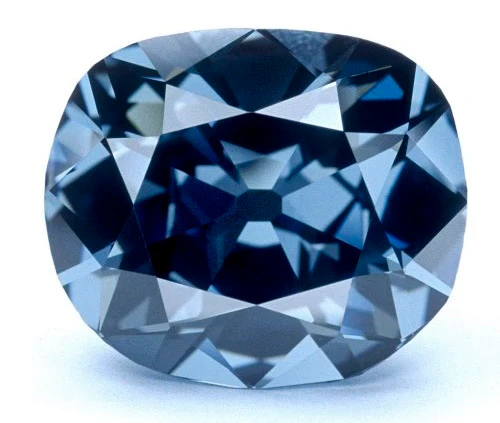
The Koh-I-Noor blue diamond
This is a century-old diamond from India weighing over 20 grams and exactly 105.6 carats. It is mounted on the crown of the British Royal Family and displayed in the Tower of London alongside the Royal Family Jewels.
The history of this blue diamond is fascinating, it may have been discovered several thousand years ago but the first written mention of this diamond dates back to the 16th century. Discovered in India, it ended up in Afghanistan before becoming the property of the British crown in 1849.
It should be noted that at the time this diamond weighed 186 carats and that it was cut by the English to give it greater brilliance, reaching its current weight of 105.6 carats.
This blue diamond stands out for its exceptional clarity and a valuation of over 10 million euros in 2011.

The Great Mughal
Light blue in color, this diamond is now missing. All we know is that the great Mughal existed and that it was part of the treasury of the Mughal empire (ancient Indian empire).
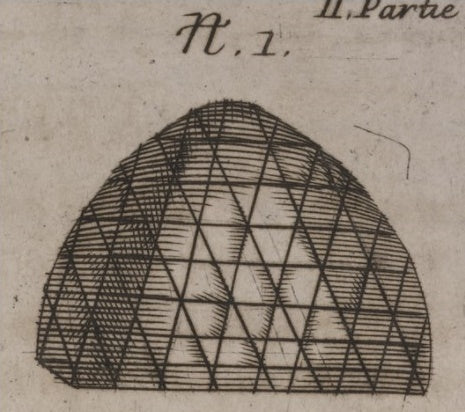
The French explorer Jean-Baptiste Tavernier managed to examine it in 1665 and the estimated weight of this blue diamond is 280 carats, which would make it the fifth largest diamond in the world.
This stone disappeared during the sack of the city of Delhi in 1739, it will soon be three centuries old.
Below you can see a sketch of the diamond drawn by Tavernier in his travel stories.
The Blue Moon
Exceptional blue diamond, the latter is characterized by a perfect crystalline structure declared Flawless by the GIA and having obtained the highest color classification for blue, despite its 12 carats.
In short, this exceptionally sized diamond is declared perfect in terms of color and clarity. Discovered in 2014 in a mine in South Africa, it was sold at auction in 2015 for $48 million, or almost $4 million per carat, one of the highest prices for a diamond in history.

If you are looking for blue diamond jewelry, you can use our services or look at these some examples of affordable blue diamond jewelry that you can find on the market
To go further:
latest posts published

Moonstone in jewelry

Engraving of men’s signet rings
Diamond clarity: inventory of natural inclusions

Creation of a Chrisme Medal in 18K Gold

18k gold men’s necklace (handcrafted)
Recycle 800 silver into pure silver

Large 18k solid gold bracelet

18k gold chain pendant

the history and symbols behind the Mo signet ring
