
When a diamond catches your eye, you’ll most likely first notice its sparkle (or, more properly, the way it reflects light). There are several important factors that contribute to the brilliance of a gemstone: brilliance, fluorescence, cut, symmetry, proportion and clarity, but today we will talk about the cut of the diamond.
In the first part we focused on providing a general overview of diamonds and their distinctive characteristics. We have presented a list of the most popular diamond cuts such as Round brilliant modernwhich stands out for its irresistible brilliance. We also discussed diamond cuts like Princess cutwith straight sides and sharp edges, Emerald cut AND Asscher cutboth notable for their clear and elegant lines, but also Cushion cutwhich offers a sophisticated and romantic look.
The rarest and most unconventional diamond cuts
Today we continue the list with lesser known diamond cuts and we’ll reveal the less popular ways to style these gems. Diamonds are known for their variety of cuts, but some of them remain in the shadows despite their unique beauty. From innovative cuts to less common options, we’ll explore the lesser-known and underappreciated ones diamond cuts which can give a touch of originality and elegance to your jewels.
Did you know? Are diamonds the hardest natural substances on Earth? The only thing that can scratch a diamond is another diamond!
The 10 least known diamond cuts
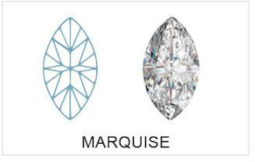
Marchiz (Marchesa cut) – it is one of the rarest diamond cuts being a strong and captivating presence. The elongated, elliptical shape with pointed ends maximizes carat weight and can create the illusion of a larger stone than it actually is. This elongated shape is also known for its ability to flatter the wearer as it fits perfectly with the natural lines and shapes of the finger. A marquise diamond typically has 58 facets and can be set vertically or horizontally, or even used as a side accent stone.
Heart (heart cut) – a timeless symbol of love and the unique heart appearance makes it a wonderful choice for a variety of engagement rings and other jewelry. It is an eccentric cut and contains 56-58 facets that capture and reflect light, resulting in a visible glow. Symmetry is important when choosing a heart-shaped diamond. It is essential that the two halves of the heart are identical and that the «bifurcation» of the heart is distinct and uniform. Heart-shaped diamonds look most impressive when they are over 0.50 carats, smaller diamonds can make the distinctive shape harder to see, especially after being set in jewelry.
Radiant cut – it’s innovative, like taking the best elements of the Emerald and Round Brilliant cuts and bringing them together to create something truly special. This combination results in remarkable sparkle and brilliance, making radiant diamonds truly spectacular jewels. With 70 facets, the radiant cut is one of the most brilliant diamond shapes available today. It’s one of those relatively new diamond cuts, created just over 30 years ago by master diamond cutter Henry Grossbard, who wanted a fresh and revolutionary approach to the world of diamonds.
Baguette cut – it is a thin, elongated and rectangular cut, with straight or conical edges that taper inwards. Some diamonds may be almost square, but are generally long and thin. Baguette diamonds are notable for having a minimum of 14 facets, much fewer than traditional diamond cuts, which typically have more than 50 facets. They are usually small and therefore work very well as accent stones for engagement rings and eternity rings.
Tribrilliant cut – a bright geometric cut, suitable for a wide variety of styles and jewelry, from rings to earrings. The name «trilliant» comes from the combination of the words «triangle» and «brilliant», due to the evident triangular shape of these diamonds, with three sharp edges and straight or rounded sides, similar to a triangle. With around 44 facets typically, some Trilliant diamonds can reach up to 50 facets, giving the diamond more sparkle and sparkle.
Old school cut and European cut – are the oldest variants of the Round Brilliant cut. The creation of the modern Rotund Brilliant cut did not appear out of nowhere, it was centuries of innovation and ingenuity that led to the creation of the Old Mine cut, which was the beginning of this process. A few decades later, the evolution of the Old Mine cut led to a more refined European cut, then quickly resulted in the modern cut we know and love today.
While there are more similarities than differences between the two cutting styles, some aspects do differ. The old mine cut comes in a square shape with larger and geometrically imperfect facets due to the lack of technology of the time, while the European cut is characterized by a round shape with longer and more precise facets thanks to special machines.
Briolette cut – one of the most fascinating and ancient diamond cuts, also known as the «teardrop cut», is characterized by a shape composed entirely of triangular facets that cover the entire surface of the diamond. Because of this symmetry and the fact that it maximizes light reflection, the Briolette cut is very popular when set as a diamond pendant or earrings. Additionally, diamonds cut in this style can also be found in whimsical colors, offering a creative option for jewelry lovers.
Rose cut – unlike the standard Brilliant, it has no flag and therefore has a decidedly flat shape. The top is a faceted dome with 3 to 24 facets, often arranged in two rows, with the star-shaped facets in the center making up the top of the diamond and a proportional number of facets on the second row. Because there are fewer facets, rose-cut diamonds reflect light from within, giving off an eye-catching but subtle glow instead of the intense reflection of brilliant.
Lily cut – a diamond cut that combines technological craftsmanship with the natural elegance of lily petals. With 77 meticulously polished facets, this unique cut offers a subtle play of light and infinite depth at the heart of the diamond. Exclusive to Louis Vuitton jewels, the Lily Cut adds an unmistakable touch of sophistication to each creation, perfectly complementing the four petals that define the brand’s famous aesthetic.
Asprey cut – is a contemporary reinterpretation of the classic
Cushion cut, a fascinating story of discovery and art in the world of diamonds. With 61 extremely high-quality facets, the Asprey cut impresses with its square shape with delicate edges that amplify light reflections. What makes it truly special is its rarity. It is created exclusively from diamonds with color grades between D and G and clarity between flawless and VS2, making it a sublime choice for those seeking something truly rare and special in the world of diamonds.
In the fascinating universe of diamonds, brilliance and beauty come in a bewildering variety of shapes and cuts, and the most unconventional ones bring a touch of originality and elegance to jewels. TO Accent jewelrywe are proud to present these lesser-known diamond cut options, inviting you to explore their beauty and enjoy their subtle yet captivating sparkle in your jewelry. Discover those diamond jewels that represent you!
latest posts published

Moonstone in jewelry

Engraving of men’s signet rings
Diamond clarity: inventory of natural inclusions

Creation of a Chrisme Medal in 18K Gold

18k gold men’s necklace (handcrafted)

Large 18k solid gold bracelet

18k gold chain pendant

the history and symbols behind the Mo signet ring

Rolex: a brand that has become essential
