
Jewels are part of us: they tell stories, remember special moments and add a touch of refinement to every outfit. Whether it’s an engagement ring, a pendant chain or a pair of your favorite earrings, all jewelry needs care. Over time, dust, sebum, perfumes, creams or even water can diminish their natural shine.
Many of us choose professional cleaning solutions or visits to the jeweler. However, there are methods natural, simple and effectivethat you can apply at home, without aggressive substances and without the risk of damaging your precious pieces.
Below we present one of them complete guide to natural solutions for cleaning jewelrywith clear steps, recommendations, but also warnings on what to avoid.
1. Why is it important to clean jewelry?
Jewelry is worn almost daily and constant contact with the skin and the environment exposes it to dirt and damage factors.
1.1. Factors influencing jewelry
-
Dust and pollution – the particles settle and reduce the shine.
-
Cosmetics – creams, perfumes, hair fixatives.
-
What – can lead to oxidation of the silver or loss of shine of the stones.
1.2. The risks of not cleaning
-
Jewelry loses its beauty.
-
Skin irritation may occur.
-
Stones can loosen and fall.
-
The value of the gem may decrease over time.
2. Basic principles of natural cleaning
Before talking about concrete solutions it is good to understand some rules:
-
Be kind – avoid excessive friction and abrasive substances.
-
Choose the right solution – gold, silver and pearls have different needs.
-
Try it first – try on a small and less visible area.
-
Complete drying – Humidity can affect jewelry.
-
Correct storage – After cleaning, store your jewelry separately.
3. Natural solutions for cleaning gold jewelry
Gold is a noble metal, resistant to oxidation, but can accumulate dirt and traces of grease.
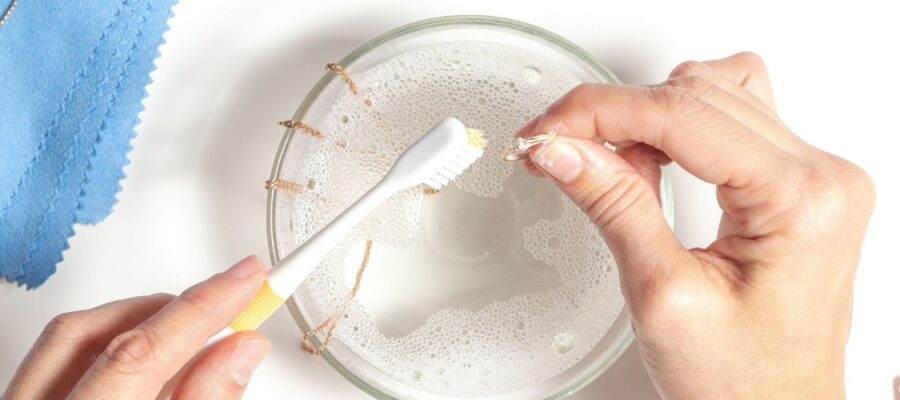
3.1. Warm water and mild liquid soap
-
Mix warm water with a few drops of neutral soap.
-
Leave the jewelry to soak for 15-20 minutes.
-
Use a soft toothbrush for hard-to-reach areas.
-
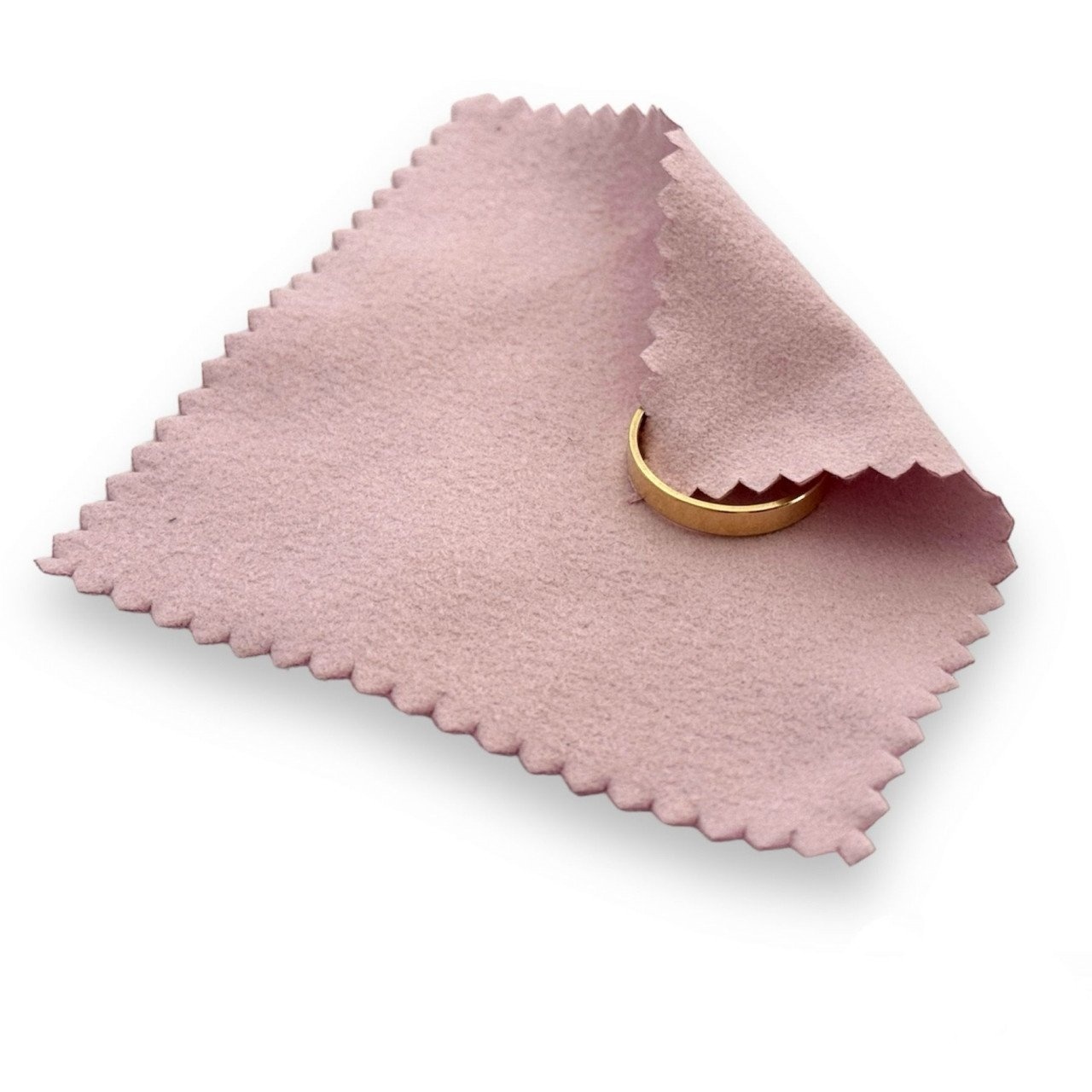
Rinse well and dry with a soft cloth.
3.2. Baking soda and water
-
Make a paste with baking soda and a little water.
-
Apply delicately to the jewel, massaging gently with your fingers.
Rinse and dry well.
👉 Ideal for yellow and rose gold, but avoid rhodium-plated white gold.
3.3. Salt and warm water
-
Place a teaspoon of salt in a bowl of warm water.
-
Leave the jewelry on for 10 minutes.
-
Rinse and dry.
👉 Simple method for quick but infrequent cleaning.
4. Natural solutions for cleaning silver jewelry
Silver oxidizes more easily, forming that black patina. Fortunately, there are effective natural methods.
4.1. Baking soda and aluminum foil
-
Place a piece of aluminum foil in a bowl.
-
Place the gem and sprinkle it with baking soda.
-
Pour hot water and leave for a few minutes.
👉 The chemical reaction cleans the oxide and restores shine.
4.2. White toothpaste
-
Apply a small amount to a soft brush.
-
Clean the jewelry in circular motions.
-
Rinse and dry.
👉Warning: do not use pastes with abrasive granules.
4.3. White vinegar and baking soda
5. Jewelry solutions with natural gemstones
Stones (diamonds, sapphires, emeralds) require special attention.
5.1. Hot water and liquid detergent
-
Mix warm water with a few drops of dishwashing liquid.
-
Leave the jewelery for 15 minutes.
-
Clean gently with a soft brush.
5.2. Carbonated mineral water
6. Natural pearl solutions
Pearls are extremely delicate and can be destroyed by aggressive substances.
6.1. Water and neutral soap
-
Mix warm water with a drop of liquid soap.
-
Clean the pearls with a soft, damp cloth.
-
Clean immediately with a dry cloth.
6.2. Olive oil for shine
To be avoided: bicarbonate, vinegar, abrasive products – they can destroy the nacre layer.
7. Natural solutions for rope or leather jewelry
Many modern jewelry combines gold or silver with leather or fabric cords.
7.1. Textile rope
7.2. Leather cord
-
Clean with a slightly damp cloth.
-
Apply a special skin balm or a drop of olive oil.
👉 Avoid prolonged contact with water.
8. Practical advice for jewelery maintenance
-
Clean your jewelry regularly, not just when it tarnishes.
-
Take them off when exercising, cleaning or showering.
-
Store them separately in individual boxes.
-
Avoid contact with perfumes or cosmetics.
-
Schedule an annual professional cleaning for your valuable parts.
9. What NEVER use
-
Chlorine or bleach: attack gold and silver.
-
Chemical solvents – can damage stones.
-
Hard brushes or abrasive sponges: scratch surfaces.
-
Vinegar on pearls: destroys the nacre layer.
Your jewels deserve constant attention and care to preserve their beauty over the years. With the help of some simple and effective natural solutionsyou can clean gold, silver, stone or pearl jewelry at home without spending a lot of money and without damaging it.
THE Finnishwe love jewels and we know how much they are worth to every person. This is why we always recommend delicate and safe methods for their care, so that each piece retains its charm and shine, but also its sentimental value.
However, for a book-like cleaning, we are waiting for you in the store.
latest posts published

Moonstone in jewelry

Engraving of men’s signet rings
Diamond clarity: inventory of natural inclusions

Creation of a Chrisme Medal in 18K Gold

18k gold men’s necklace (handcrafted)

Large 18k solid gold bracelet

18k gold chain pendant

the history and symbols behind the Mo signet ring

Rolex: a brand that has become essential
