
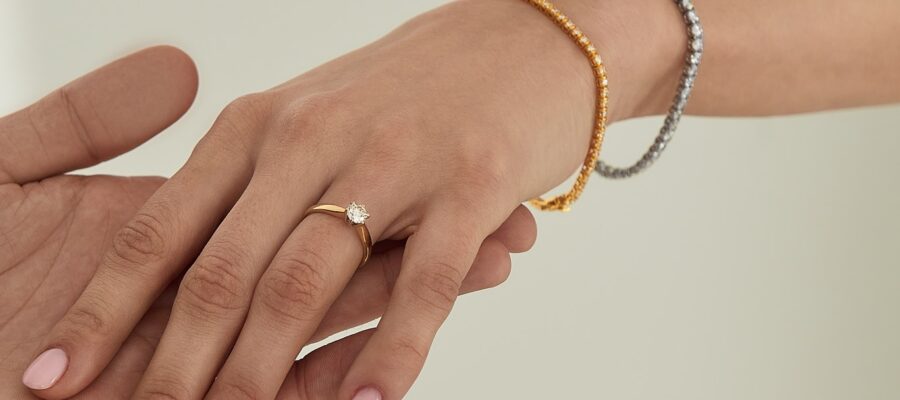
When you carefully examine gold jewelry, the markings on it become more than just symbols: they contain important information. Each stamp or hallmark reveals the essential details of the piece, from the purity of the metal to its rich history. The marking of gold objects and jewelery has its origins in ancient civilizations guaranteeing their authenticity. By understanding these signs, you will be able to appreciate not only the beauty, but also the heritage contained in each piece of gold.
The colors of gold in jewelry
Yellow gold – in its purest form, gold is yellow. But pure gold is too soft to be used alone in jewelry, so other metals such as silver, copper or zinc are added in varying proportions to increase its durability and improve its appearance. Of all colors, yellow gold jewelry requires the least maintenance.
White gold – at first glance it could be confused with silver, but if looked closely you will notice a slight pale yellow tinge. White gold is obtained from an alloy of pure gold with white metals such as silver, nickel or platinum or palladium. An advantage of white gold jewelry is that it is less prone to scratches.
And Rosa – it is an alloy of gold and copper, and the color differences are given based on the ratio between gold and copper and the presence or absence of silver. Due to the copper content, rose gold jewelry is more durable than yellow or white gold.
How is gold jewelry marked?
Gold jewelry is marked in two ways to indicate its purity: by carats and/or by stamping with numbers.
The term «carats (Kt or K)» refers to the purity of gold and is measured in fractions of 24. The karat number indicates the proportion of the piece that is pure gold. The higher the number, the purer the gold. 24K represents the purest form (meaning 24 out of 24 parts is gold).
Unlike the karat, the numeric stamp expresses the purity of the gold in parts per 1000. The mark is printed as a three-digit number indicating the percentage of gold in the gem.
- 999 – the purest gold is 24K, being 24/24, considered 100% pure gold. However, in practice most gold contains impurities, resulting in an actual percentage of pure gold of 99.99% – This is prized for its intense luster and exceptional purity, making it ideal for luxury jewelery
- 958 – 23 karat gold with a percentage of pure gold of 95.83%.
- 916 – 22K gold with a pure gold percentage of 91.66%.
- 875 – 21 karat gold with a pure gold percentage of 87.5%.
- 833 – 20 karat gold with a pure gold percentage of 83.33%.
- 750 – 18K gold with a percentage of pure gold of 75%: preferred by those looking for the intense look of gold with extra resistance for everyday use.
- 666 – 16 karat gold with a pure gold percentage of 66.66%.
- 585 – 14K gold with a pure gold percentage of 58.33% – prized for the ideal balance between the purity of the material and its utility, offering an authentic gold appearance combined with greater resistance for everyday use.
- 500 – 12 karat gold with a percentage of 50% pure gold.
- 417 – 10 karat gold with a pure gold percentage of 41.67%.
- 375 – 9K gold with a pure gold percentage of 37.5%.
- 333 – 8K gold with a pure gold percentage of 33.33%, which is also the lowest standard
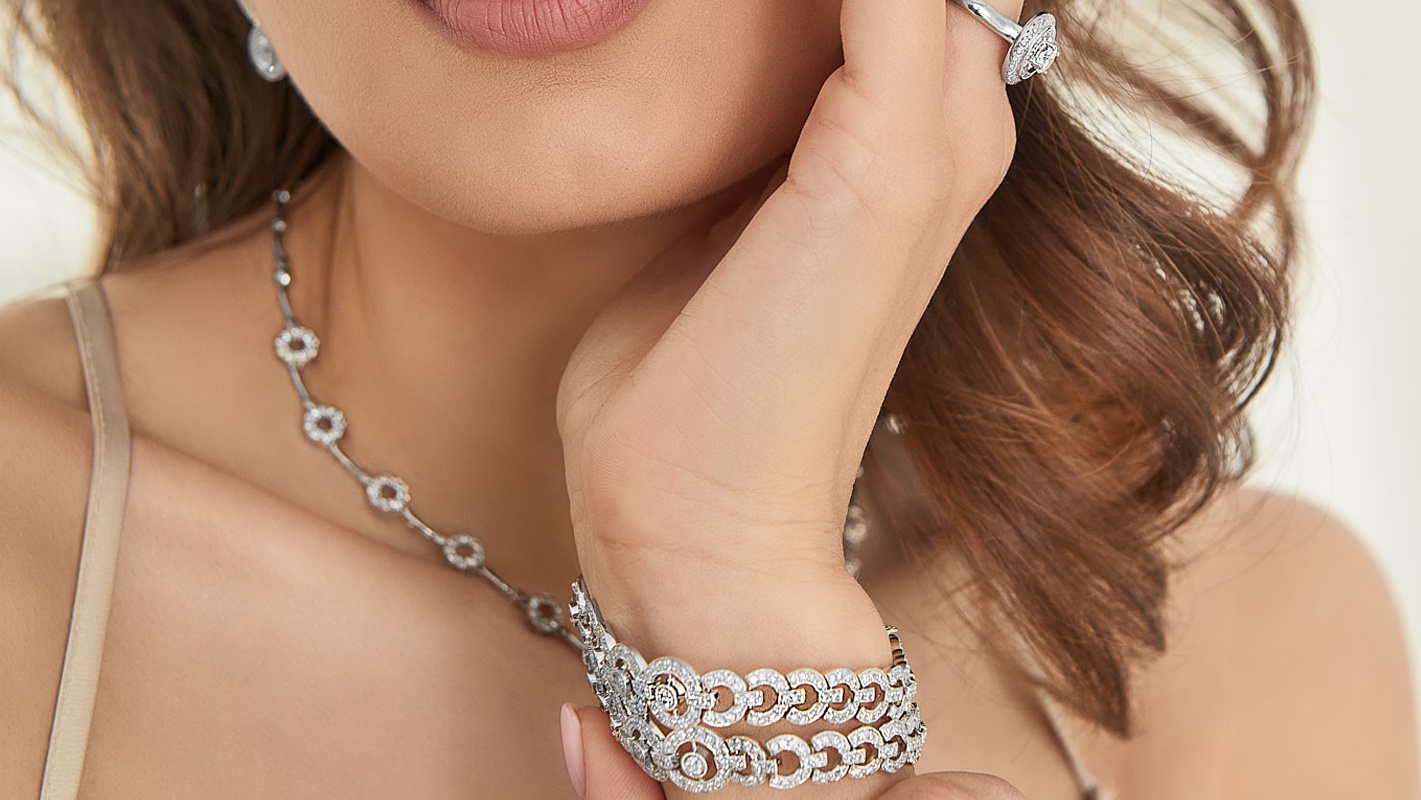
Markings for Gold Plated Jewelry:
GP or GEP -These markings represent «Gold Plated» or «Gold Plated». This means that the jewelry is actually stainless steel or brass with a thin outer layer of gold (0.05%). Gold-plated jewelry is often of low quality, oxidizes easily and can cause irritation to sensitive skin.
GO to yourself RGP – these represent «Gold Overlay» or «Rolled Gold Plated». It is a piece of jewelry made of stainless steel, brass or copper with a gold layer of at least 10 carats. The layer is thicker than gold plating, which gives it greater resistance.
GF – a gold jewel with the GF mark is «Gold Filled». GF parts are generally made of copper or brass with a thicker gold layer of at least 5%. A marking such as «14K GF» or «18K GF» indicates the purity of the gold layer used in the coating.
925 – is a mark indicating that the jewel is made of sterling silver with a purity of 92.5%, having a layer of gold, also known as vermeil.
No marking – this can also indicate vermeil, which is sometimes not labeled.
In addition to these brands that represent the purity of the gold used, we can also find the manufacturer’s brands. These can appear in the form of a logo, name or initials, which verify the authenticity of the piece. An example would be Tiffany & Co. jewelry, which features the T&Co brand. or the acronym PW for the jewels made by Philippe Wolfers.
THE Accent jewelryWe celebrate this precious tradition by offering gold jewelry for women and gold jewelry for men which adds a touch of sophistication and elegance to any style.
latest posts published

Moonstone in jewelry

Engraving of men’s signet rings
Diamond clarity: inventory of natural inclusions

Creation of a Chrisme Medal in 18K Gold

18k gold men’s necklace (handcrafted)
Recycle 800 silver into pure silver

Large 18k solid gold bracelet

18k gold chain pendant

the history and symbols behind the Mo signet ring
